Disclosure: this guide is written by Apollos Digital. We build websites, systems and AI tools for businesses, and we’ve kept this guide to the history and what it means in practice.
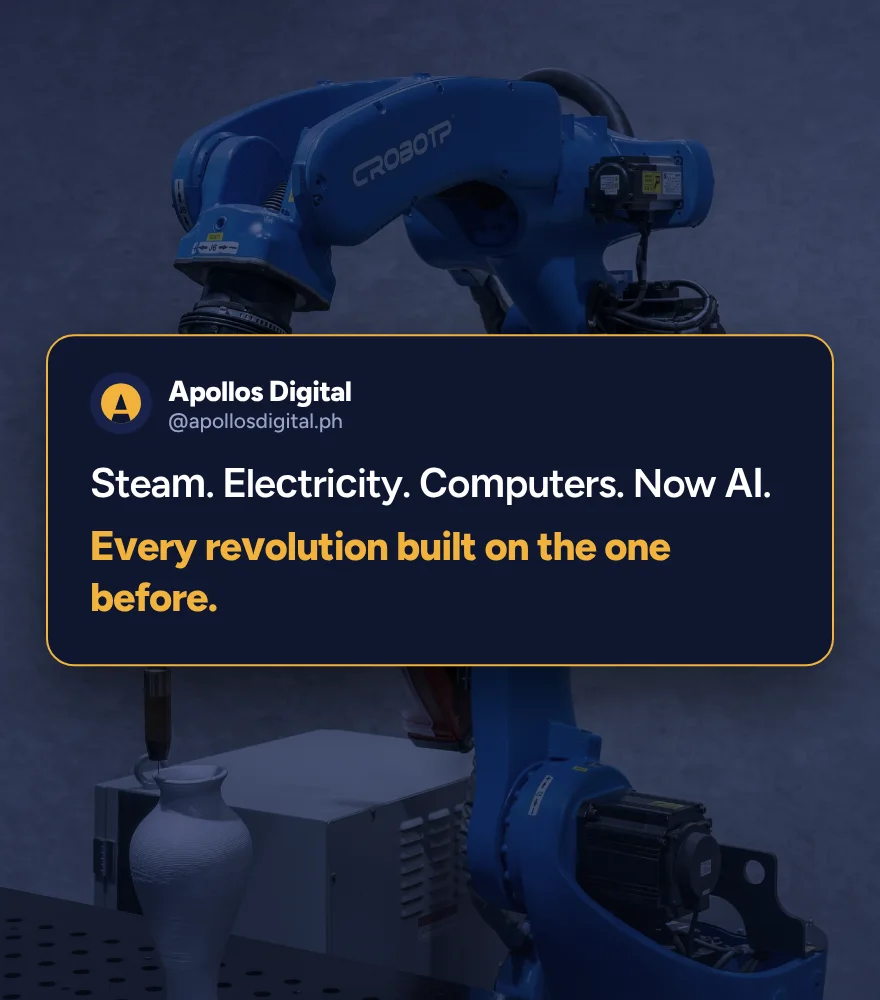
The short answer: there have been four industrial revolutions. Steam brought machines and factories, electricity brought mass production, computers and the internet automated work and changed how we communicate, and today’s fourth revolution connects machines, products and people through AI, robotics and the cloud. Each one built on the one before, and the fourth is moving faster than any of them.
1. Steam power and factories (from about 1760)
The First Industrial Revolution began in Great Britain around 1760. Machines powered by water and steam replaced much of the work done by hand, and factories and railways appeared.
2. Electricity and mass production (about 1870 to 1914)
The Second Industrial Revolution was driven by electricity, steel and the telegraph. Electricity made the modern production line possible, so products such as cars could be made in large numbers.
3. Computers and the internet (second half of the 20th century)
The Third Industrial Revolution, also called the Digital Revolution, brought electronics and computers that automated production. Personal computers, and later the internet, changed how people communicate and work.
4. Connected, intelligent systems (today)
The Fourth Industrial Revolution connects the digital and physical world. Machines, products and people are linked through the internet, and artificial intelligence, robotics, 3D printing and cloud computing work together.
- Industry 4.0: in manufacturing, this is called Industry 4.0. The term comes from a German government project and was first presented at the opening of the Hannover Messe trade fair in 2011 (DFKI: Ten years of Industrie 4.0, interview with Wolfgang Wahlster).
- “Fourth Industrial Revolution”: Klaus Schwab, founder of the World Economic Forum, made the term popular. “Mastering the Fourth Industrial Revolution” was the theme of the Forum’s 2016 annual meeting in Davos (World Economic Forum: Fourth Industrial Revolution the focus of Annual Meeting 2016).
Each one built on the last
There would be no internet without electricity, and no AI without computers and the internet. The waves also overlap: a factory from the third revolution can still run next to a fully connected one, and one business can be at a different stage in each department. Your accounting might be fully online while your inventory still lives in a notebook.
What makes the fourth different
Speed and reach. The first revolutions took decades to spread. Today, a new AI tool can reach millions of people within weeks, and the changes touch almost every industry, from farming to banking. The biggest changes happen where technologies are combined, like AI that reads the data your online orders already collect.
What it means for your business
- Expect your tools to change. The skills your team needs now change faster than ever, so learning new tools becomes a normal part of every job.
- Get the basics digital first. AI can’t help with records that only exist on paper. Start with the process that eats the most time: orders, bookings, invoices or inventory.
- Then connect and automate. Once the data is digital, link your tools together and let automation and AI handle the repetitive parts.
For a closer look at those steps, read Digitization vs digitalization vs digital transformation.
Questions, answered
What are the four industrial revolutions?
The first (from about 1760) brought water and steam power, machines and factories. The second (about 1870 to 1914) brought electricity and mass production. The third (second half of the 20th century) brought electronics, computers and the internet. The fourth, happening now, connects the physical and digital world through AI, robotics and cloud computing.
What is Industry 4.0?
Industry 4.0 is the name for the fourth industrial revolution in manufacturing: factories where machines, products and people are connected and share data. The term comes from a German government project and was first presented at the Hannover Messe trade fair in 2011.
Who made the term “Fourth Industrial Revolution” popular?
Klaus Schwab, founder of the World Economic Forum. It was the theme of the Forum’s 2016 annual meeting in Davos, “Mastering the Fourth Industrial Revolution.”
What makes the fourth industrial revolution different?
Speed and reach. Earlier revolutions took decades to spread, while a new AI tool can reach millions of people within weeks, and the changes affect almost every industry.
What does it mean for a small business?
The tools you use change faster than before, so learning new ones becomes part of normal work. Most small businesses benefit by getting their basic processes digital first, then adding automation and AI where they save the most time.
Sources
Checked November 20, 2026. Dates for each revolution are approximate and vary slightly between historians.
- DFKI: Ten years of Industrie 4.0, interview with Wolfgang Wahlster
- World Economic Forum: Fourth Industrial Revolution the focus of Annual Meeting 2016
Related: AI automation · Custom software · Digitization vs digitalization vs digital transformation